
Solar Feeds Peekskill
Safe, Clean, Community-Owned Energy
Reducing CO2 emissions, delivering electricity bill savings, and boosting food security to Peekskill through floating solar on Camp Field Reservoir — all at no charge to residents!
The Solar Feeds Peekskill project at Camp Field Reservoir is a 1.68 MW floating solar array with panels installed on the water’s surface, conserving land used for wildlife habitat, agriculture, housing, and recreation. This method also prevents erosion and stormwater runoff issues because there is extremely limited land disturbance during construction and over the life of the project.
While this may be the first time you’ve heard of an energy utility floating on a water supply, the safety of this floating solar system has been proven time and time again throughout our country and around the world.
Meaningful Benefits for the Peekskill Community
As a community-owned utility, this solar project will bring meaningful benefits to the City of Peekskill over its 25-year life.

Food Sovereignty Fund
to support local food security efforts with an estimated $50,000 per year or $1.2 million over the project lifetime

Energy Bill Savings
at least 20% for low- and moderate-income households and 10% for other households or small businesses in Peekskill (approximately $1.1 million in utility bill discounts for 400 Peekskill households over the project lifetime)

Funding for Peekskill
received through annual lease payments to the City for an estimated $645,000 over project lifetime

Reduced CO2 Emissions
amounting to an estimated 30,000 tons of CO2 avoided, about the same as taking 6,500 passenger vehicles off the road

“
This is an exciting step forward. We’re making an investment that will deliver clean energy, cost savings, and environmental benefits for decades to come.
— A village official about the installation of Ohio’s largest floating solar array in Monroeville (Source)
This installation method isn’t new — it’s been successfully implemented in the U.S. on drinking water reservoirs in New Jersey, Utah, Ohio, and even in Peekskill’s neighbor to the north, Cohoes, New York.
The solar panels, floats, and anchors are certified to EU andUK safety standards, which are far more strict than U.S. standards. The solar panels for this project are exclusively manufactured by Ciel & Terre, the pioneer of floating solar panel solutions and recognized as the ‘gold standard’ in the industry. Their trademarked floating solar panel system has been successfully installed in over 30 countries.
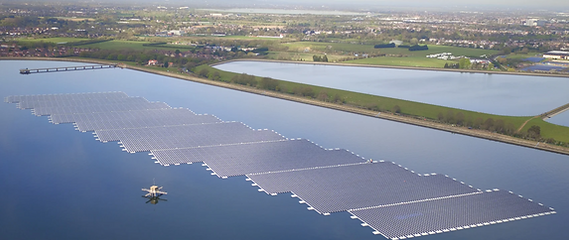
Proven Technology on Drinking Reservoirs
The longest-standing floating solar installation is on the City of London’s Queen Elizabeth II reservoir which supplies water to nearly a third of the city, an estimated 2-3 million people. This floating solar system was produced by the same company as the Camp Field project and has received no reports of negative human or environmental impact in the 10+ years it's been in operation. Source.


Image of the floating solar panel system designed and produced by Ciel & Terre.
The floats are made from high-density polyethylene (HDPE), a food-grade material widely used in municipal water infrastructure, including drinking water pipes and storage tanks in cities such as Indianapolis, Colorado Springs, and Saint Petersburg.
They are certified safe for contact with drinking water under British Standard BS 6920:2000, one of the most rigorous material safety standards in the world. The HDPE is free from BPA, phthalates, and PFAS, and is UV-stabilized for long-term outdoor exposure with a service life of over 50 years.
The panels will cover roughly 38% of the larger of the two Camp Field reservoirs, leaving a majority of the reservoir water uncovered.
Maintaining Water Safety and Quality
In addition to the solar project meeting product safety standards above and beyond what is required in the U.S., further safety measures are in place in the unlikely event of an issue.
Peekskill’s Camp Field Reservoir is a holding pond for raw source water that comes from the Wiccoppee Reservoir, approximately 20 miles from Peekskill. All drinking water from the Camp Field Reservoir goes through the water treatment plant before being distributed to households and undergoes regular stringent testing by the city.
Additional testing by the city will be paid for by the project owners to monitor water quality as required by the NYS Department of Health.


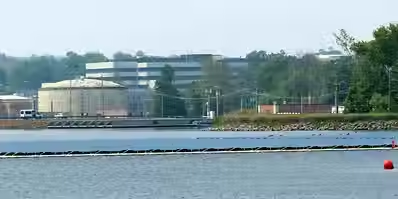
Peekskill Wastewater Treatment Plant. Source.
“
When we can use a cleaner, greener, more efficient energy source, we want to seize that opportunity.
— Mark McDonough, president of New Jersey American Water, about the Sayreville, NJ, water reservoir solar installation (Source)
Project Timeline

Project Partners
The project will be co-owned by the Ecological Citizen's Project, a Hudson Valley social impact nonprofit, and solar developer Working Power. As a nonprofit, the ECP is donating all of its ownership profits to the Peekskill Food Sovereignty Fund.
They were awarded the project in April 2024 after responding to the City of Peekskill's solar Request for Proposal (RFP) and began working to develop a floating solar project proposal after the city identified the Camp Field Reservoir as their top priority for solar development.
The project is backed by funding from NYSERDA and the federal Investment Tax Credit, with additional support from the Department of Energy and the New York Power Authority in recognition of its mission and benefits to Peekskill residents.

Ecological Citizens Project (ECP) is a Hudson Valley-based nonprofit that has been doing meaningful community work in Peekskill for over 10 years, including building the Peekskill Regeneration Farm. The Farm is a public food garden that utilizes organic methods to grow nutrient-rich foods offered at no cost to residents, provides jobs for local youth, and hosts experiential education opportunities for community members.

Working Power is a project development and financing firm that connects frontline communities with impact investors to build community wealth through clean energy solutions. WP partners with nonprofit organizations, small businesses, and labor unions to co-develop and co-own clean energy assets that center racial and economic justice. WP has invested over $65 million in and installed 12 clean energy community-owned projects.
Additional Parties

D3Energy, the project's engineering and construction contractor, has built floating solar systems on drinking water reservoirs across the country. Widely recognized as the leading floating solar developer, D3Energy has proudly constructed the most floating systems in the U.S.

LaBella Associates, the permitting lead based out of Rochester, New York. LaBella guided the City of Cohoes further up the Hudson River through New York’s first municipal floating solar project on a drinking water reservoir.

City of Peekskill, which owns the land for the proposed project and oversees the local permitting process. The solar team has worked closely with the city to develop the project, including six public presentations to the City Council, weekly meetings with the City Manager's Sustainability team, and site visits to the Camp Field Reservoir site with the Water & Sewer Department.